Experts are clear about it. Prague is short of over 20,000 flats needed to meet current demand. According to them, the deficit, which has been growing for years, has been caused by a rigid approval system for new construction and excessive red tape. On average, Prague approves only 3.4 flats per 1,000 inhabitants a year, while abroad the figure is twice as high (source: Forbes 2021, GC analysis).
The number of flats is rising, but not enough
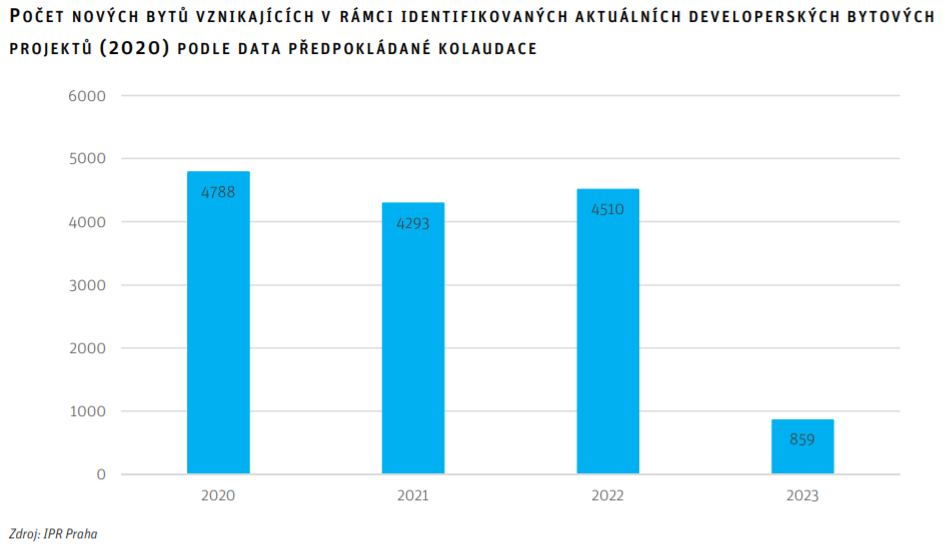
Over the past two years, the supply of flats in Prague has risen for the first time. In its annual analysis, the Prague Institute of Planning and Development notes that 2019 saw the first increase in the number of vacant flats on the market, and the upward trend continued in 2020. The forecast for the coming years is shown in the IPR chart below. It must be pointed out, however, that the supply of flats falls far short of demand, which is growing much faster. Last year alone, demand for new flats in Prague rose by 3.4% (source: CEEC study 2021). Supply, however, increased by only 1.4%. According to the directors of development companies surveyed, this only widens the gap that will be very hard to bridge in the years to come. “Since changes to the existing zoning plan in Prague have practically come to a standstill and many brownfields have been subject to construction bans for years, the pace at which new projects are approved is clearly not going to speed up. Nor will the amended Building Act help; it is certainly a step in the right direction, but it will by no means bring new flats to the market,” says Michaela Tomášková of Central Group a. s., commenting on the situation in a survey by CEEC Research.
The problem is to be solved by 2030
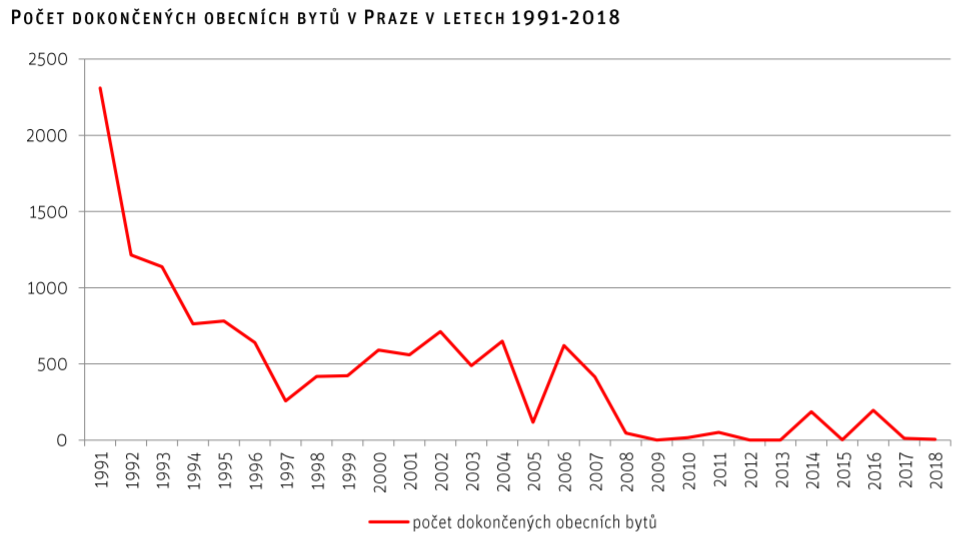
The Prague Institute of Planning and Development (IPR) has drawn up a confident plan to solve the shortage of flats by 2030. The goal is to build 9,000 flats a year and to own 35,000 municipal flats by 2030. The question remains who will build all those much-needed flats, when development companies are constantly held back by building authorities and heritage and nature conservation institutions. The city itself could be the answer if it committed to building municipal housing. At present, however, the reality is different, as municipal flats make up about 5% of the housing stock. Between 2011 and 2019 alone, Prague's municipal housing stock shrank by more than half (source). Over the past decade, the Prague City Administration has carried out only a minimal number of new housing projects (see the chart from the Quality of Life of Prague Residents Study 11/2019). Anyone looking for a new flat can therefore expect the shrinking housing stock to be made up for solely by development companies. At present, there is almost no construction of new housing units initiated directly by the city or the state. The question, then, is how the new political players that emerged from the October 2021 elections will approach the issue. Will we continue to rely mainly on developers, or will the situation finally start moving after years of stagnation thanks to an initiative from the state or the cities?