Representatives of the city's institutions are gradually admitting that the capital has a problem spending the investment funds it has allocated. Whether it is the Prague Institute of Planning and Development or the Centre for Architecture and Urban Planning, there is agreement on the failure to effectively transform potentially attractive locations, to revitalise them, bring them back to life and give them a new purpose. The city centre, whether narrowly or broadly defined, is home to a whole range of huge spaces and vacant lots that could be used to build multifunctional complexes combining housing, retail space, services and offices. Today they serve as bus parking, or host small workshops, garages, or playgrounds that have been out of use for years and overgrown with self-seeded trees.
Why isn't Prague building?
What should new development in Prague's wider centre look like? Building authorities and investors often disagree on this – and so do the experts we asked. In most cases, though, they do agree that when old vacant lots are filled in, the new buildings should respect the character of the street and not exceed the height of the surrounding development. That was recently achieved in Karlín, for example, where the award-winning residential buildings Iconik and Dva domy went up. But what should projects look like when they are built on a genuine greenfield site, or at least a notional one in the form of Prague's vast brownfields? A typical example of such development is the future of the Žižkov freight railway station area, the Smíchov City district or Prague-Bubny.
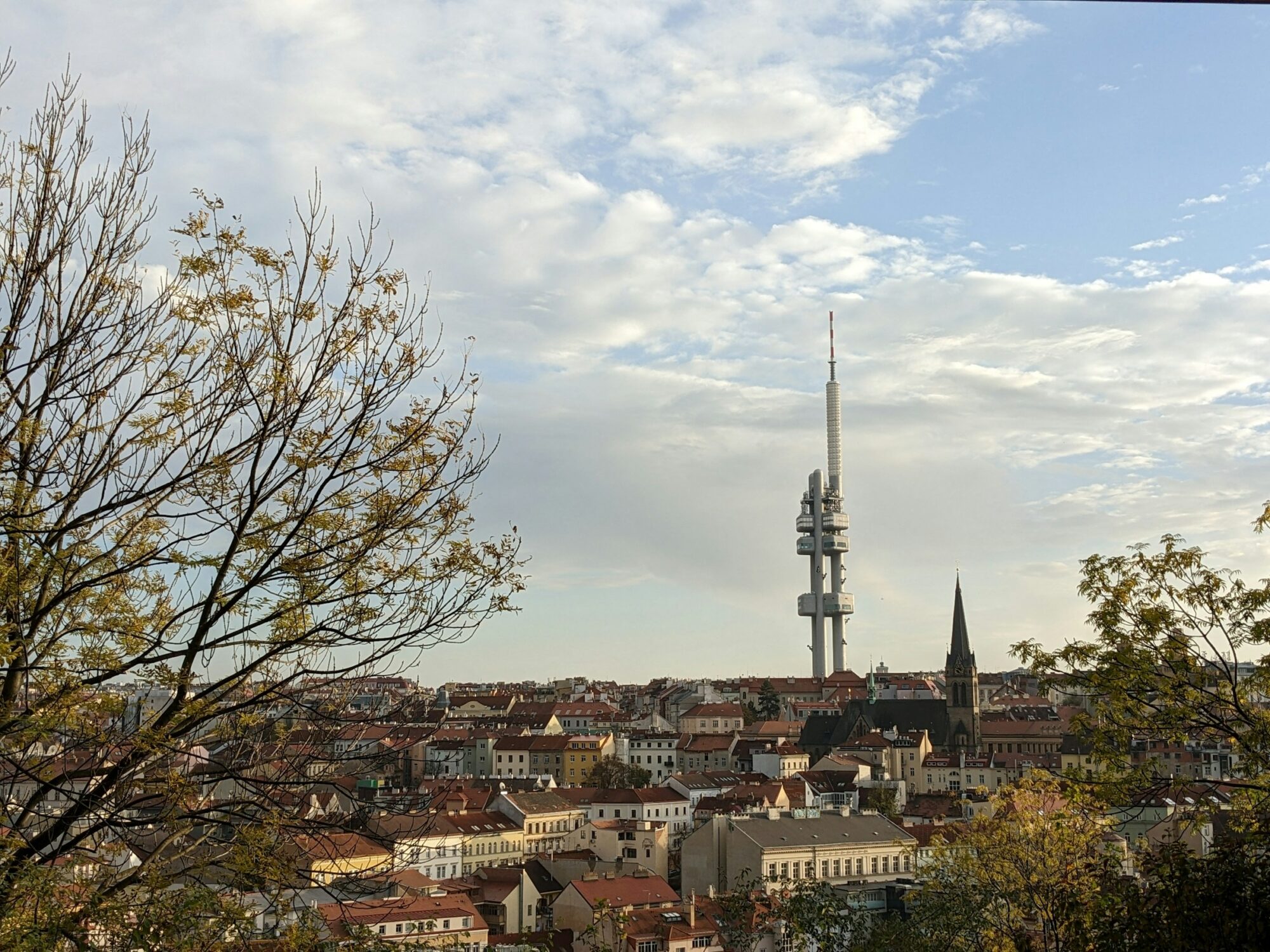
Three residential buildings would supposedly disrupt the Žižkov skyline unacceptably. The 216-metre transmitter tower, on the other hand, is apparently just fine
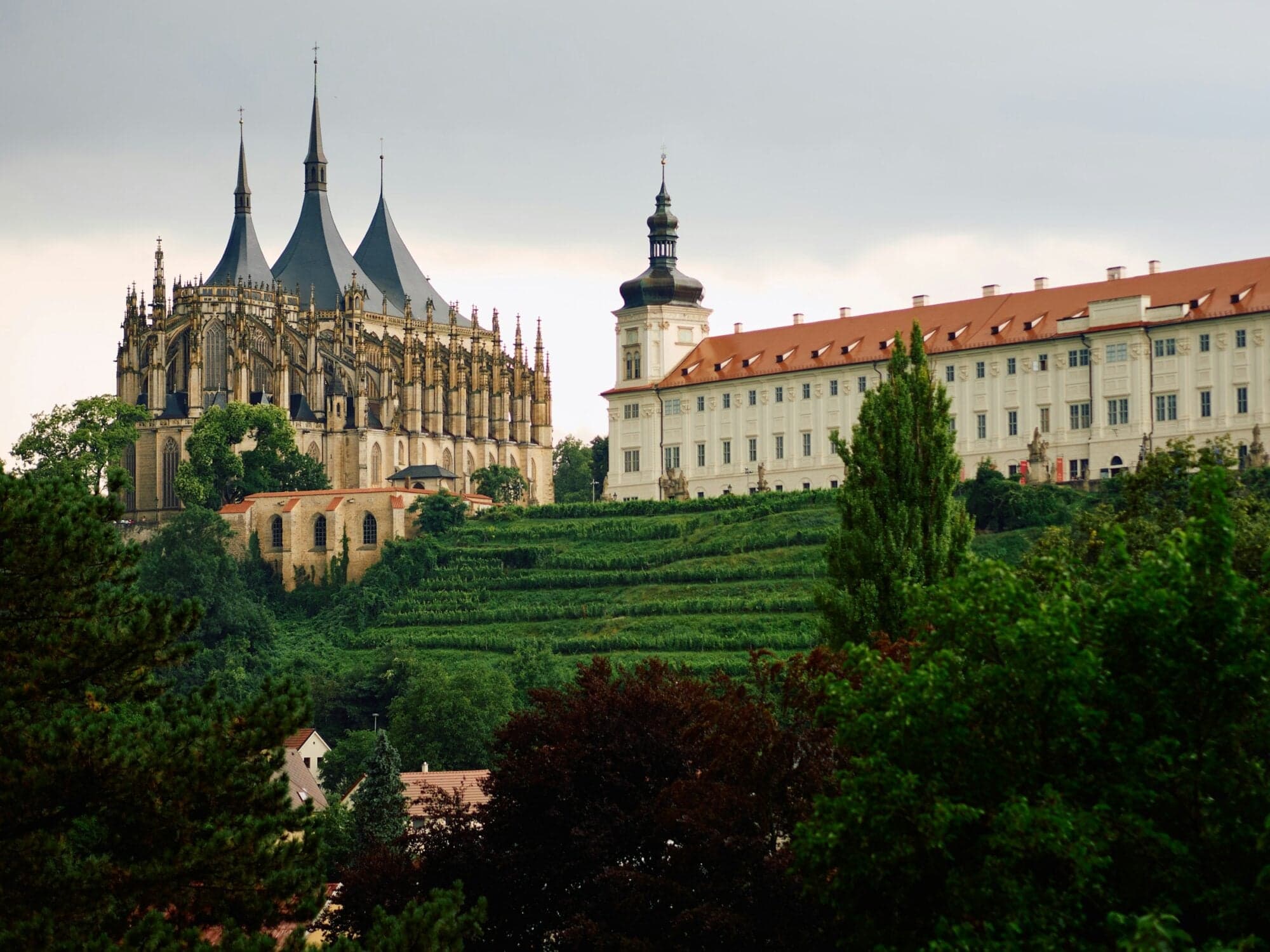
Architect Eva Jiřičná was pressured by UNESCO into “erasing” two towers from the future Žižkov skyline, and in Smíchov blocks of barely six-storey buildings are now going up. Meanwhile, the Prague Institute of Planning and Development is practically shouting that solving the housing crisis requires residential buildings in such locations to be at least twice as tall. This is blocked partly by complicated permitting procedures and partly by the classic “NIMBYism” of local residents. The legislation on developer contributions and the construction of public amenities is problematic too. And so housing, whether owned or rented, keeps getting more expensive, as Czech Statistical Office data show.
When will flats in Prague get cheaper?
According to most of the experts we asked, the option to build higher would have a very positive effect on housing affordability, for several reasons. Economies of scale and greater density per square metre of land would make lower property prices possible, bringing them at least somewhat closer to figures that are realistic for the middle and upper middle class. Today, its members can barely afford even the smallest flats. At the same time, there is a simple equation: build higher and you get more flats. And the more flats there are, the greater the competitive pressure on property prices. Statistics from cities around the world consistently show that wherever the rules for building new housing have been relaxed, property prices have dropped sharply. What is more, people can then spend their spare money on goods and services, which supports the local economy.
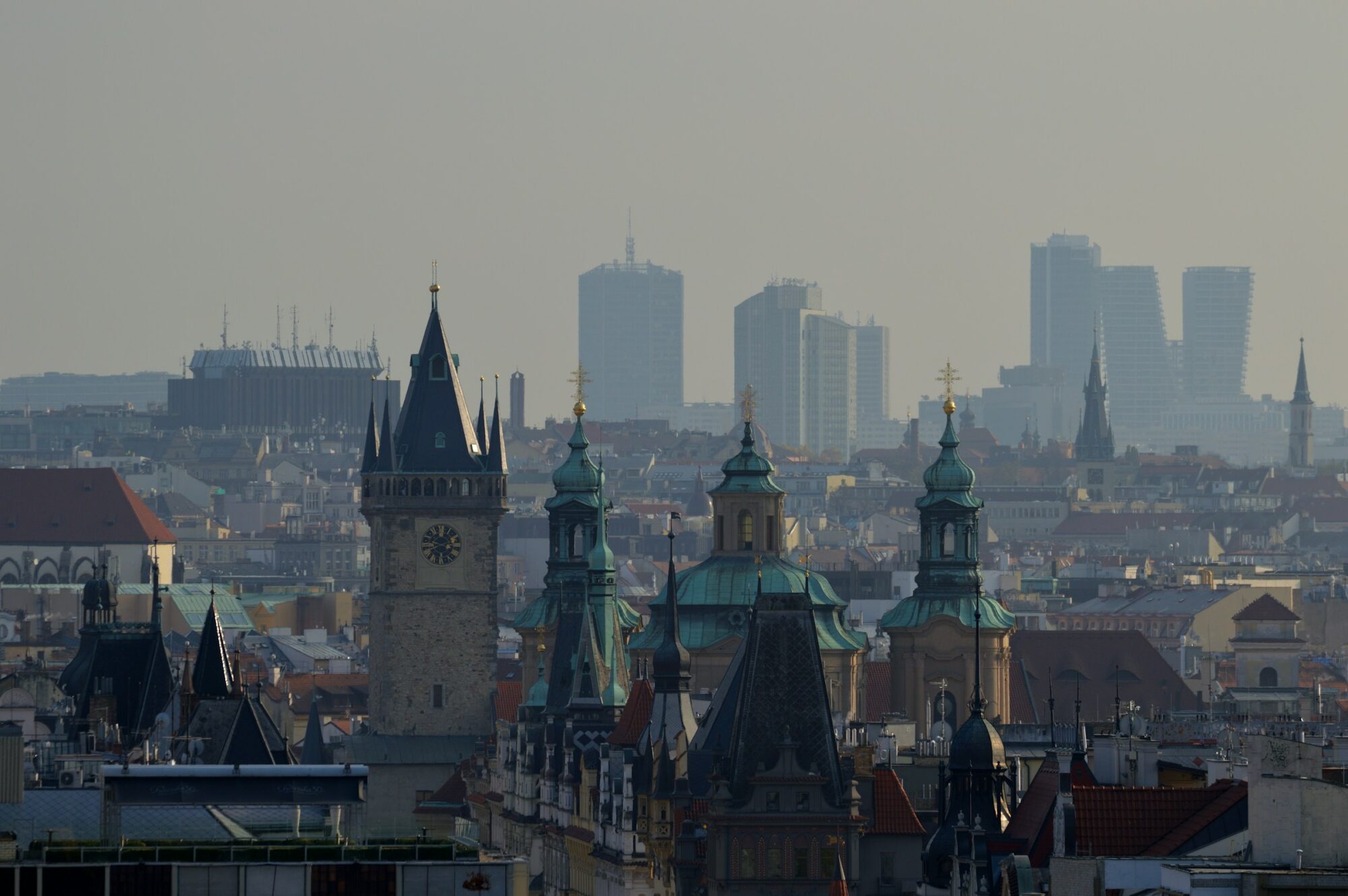
Over the “skyscrapers” in Pankrác, UNESCO threatened to strike Prague's historic centre off the World Heritage list. Some say that would be the best thing that could happen
Where are property prices heading?
At present, more than half of all buildings in Prague are less than 10 metres tall, and given the complicated legislation and objections from heritage authorities, there is little sign of that changing. So the city grows mainly outwards, often taking up agricultural land, while problems with amenities and transport infrastructure spill over into outlying districts and the Central Bohemian periphery. The historic core, meanwhile, is turning into a trdelník open-air museum. Yet all it would take is one thing – to follow the example of nearby capitals such as Warsaw and not be afraid of a few extra metres. It is almost certain that housing affordability, and the chance to buy investment flats with the potential to be passed on to one's children, would improve considerably. If that does not happen and Prague remains mentally frozen at the end – or perhaps even in the middle – of the 20th century, prices will keep climbing. Have you managed the seemingly impossible and recently bought a flat to rent out? We will be happy to help you find the ideal, trouble-free tenant. Or we can arrange guaranteed rent for you straight away. Call us on +420 277 000 330 or send a message to sales@flatservice.cz. We will get straight back to you with a calculation of how much we can rent your property for.