Young Czechs aged 25 to 35 spend a bigger share of their wage or salary on rent than in most selected Western European countries, the Czech News Agency reported recently. And the data accompanying its report are genuinely alarming in their own way. For a flat of roughly 60 square metres, i.e. a typical two-bedroom ideal for a couple or a family with one child, they pay on average almost 40% of the median gross wage (17,700 Kč out of 46,000 Kč). Yet in absolute terms that is more than their peers of the same age have to find in their wallets in countries such as Germany, Austria or France.

The saying “two can pull better than one” applies to many aspects of life, but to housing above all
How many people claim the housing benefit?
When politicians promised in the early 1990s that we would one day catch up with the West, they probably did not expect that we would even overtake it. Only it would be in rather unflattering statistics. The worst off here are so-called singles and single parents, because covering the rent from one salary is far harder than from two. It should be mentioned that those who spend over 30% of their income on housing are entitled to a state housing benefit. Some 283,500 households currently claim it, which is a staggering number. They include high-earning self-employed people with luxury flats in Prague, something a number of people rightly criticise. The conditions will therefore soon be changing.
What are rents like in Austria or Germany?
What is the situation beyond our borders? According to the Austrian statistical office, for example, the median wage in the same age group is around 90,000 Kč and the average rent 15,850 Kč, which in absolute terms is less than in the Czech Republic. And once we start looking at relative ratios, the whole picture looks even worse. Young Austrians spend only around 18% of their gross income on rent. That leaves them more than twice as much for hobbies, entertainment, further education, travel or savings.
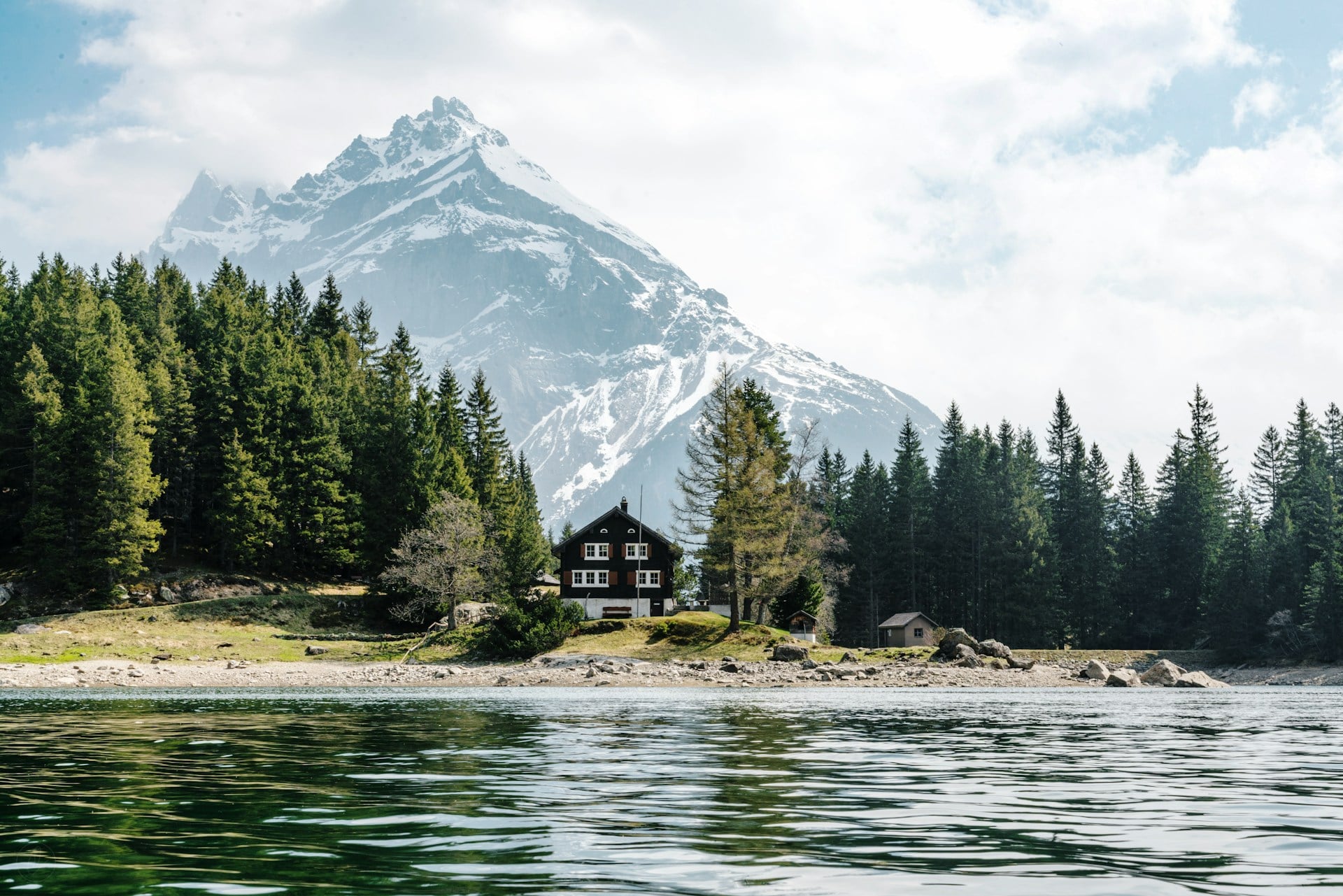
Housing with a view of Alpine peaks used to be a byword for luxury; now it may well be more affordable than in Czech regional cities
The situation is currently similar among our western neighbours. Germans commonly pay around 15,000 Kč (600 euros) for a seventy-square-metre flat, while the median wage of young people was over 100,000 Kč a month. Italians, for instance, are currently in a similarly difficult position to Czechs, spending about half their income on housing. What is more, the country is still struggling with high unemployment, especially among graduates.
Rising housing costs are driven by energy
So far we have been talking mainly about rent payments without other essential items such as services and energy. According to data published by the Czech Statistical Office, in the first quarter total household spending on housing rose by 21.7% year on year! Yet net household incomes grew by only 7.7%. In real terms, most of us are left with less and less in our wallets once the regular bills are paid. The cause is not to be found in landlords. Gas prices jumped by about 44% year on year, electricity by 26% and water by 12%. Many landlords, out of solidarity with long-term tenants, did not even raise the rent in line with inflation. After all, we have pointed out in the past that the law specifically addresses such cases and does not even allow increases of tens of percent. Anyone who owns the flat or house they live in and has already repaid any mortgage is sitting pretty. Their housing costs amounted on average to “only” 14% of total net income.
Fighting poverty at every level
An alarming survey was published last year by Instant Research. It found that roughly one fifth of Czech families spend a full three quarters of their net income on housing. Admittedly, the grey economy plays into these statistics to some extent, as in the lower social strata in particular part of people’s income does not officially exist. Even so, it pays to be on guard. If someone is left with just a quarter of their income after paying everything, and has to support themselves and possibly their children on it, they are unlikely to be able to cover unexpected expenses, let alone build up any reserves for harder times. It seems, then, that these proverbial harder times have arrived for part of society right now. And a solution is nowhere in sight.

About 15% of Czechs have no financial reserve at all; another 15% would have enough for less than a month
It is all somewhat reminiscent of the state of the Czech economy, or rather the outlook for the 2025 state budget. Mandatory and quasi-mandatory expenditure (i.e. spending the state theoretically does not have to make, but in practice does) makes up an incredible 93% of the current draft state budget for next year. That means the government can effectively work with just 7% of the funds entrusted to it, and in practice it thereby loses control and any room for policies of its own. Just as families who spend too much on housing lose control over their lives and often slide into a debt spiral. Finding a reliable, solvent tenant who will have no trouble paying the agreed rent in the future and contributing to the regular upkeep of the flat is getting harder and harder. Flat Service will be glad to help. Our Partner and Garant services let you rent out your property without risk or worry. Would you like to know more? Call us on +420 277 000 330 or write to sales@flatservice.cz. We will be happy to view your flat and calculate how much we can safely rent it out for.